
Last updated October 8, 2026
Non-destructive entry first, always - and we re-key Schlage, Kwikset, and Baldwin locks on the spot while you watch
You get a price before we start. It does not change when we arrive. No surprises.
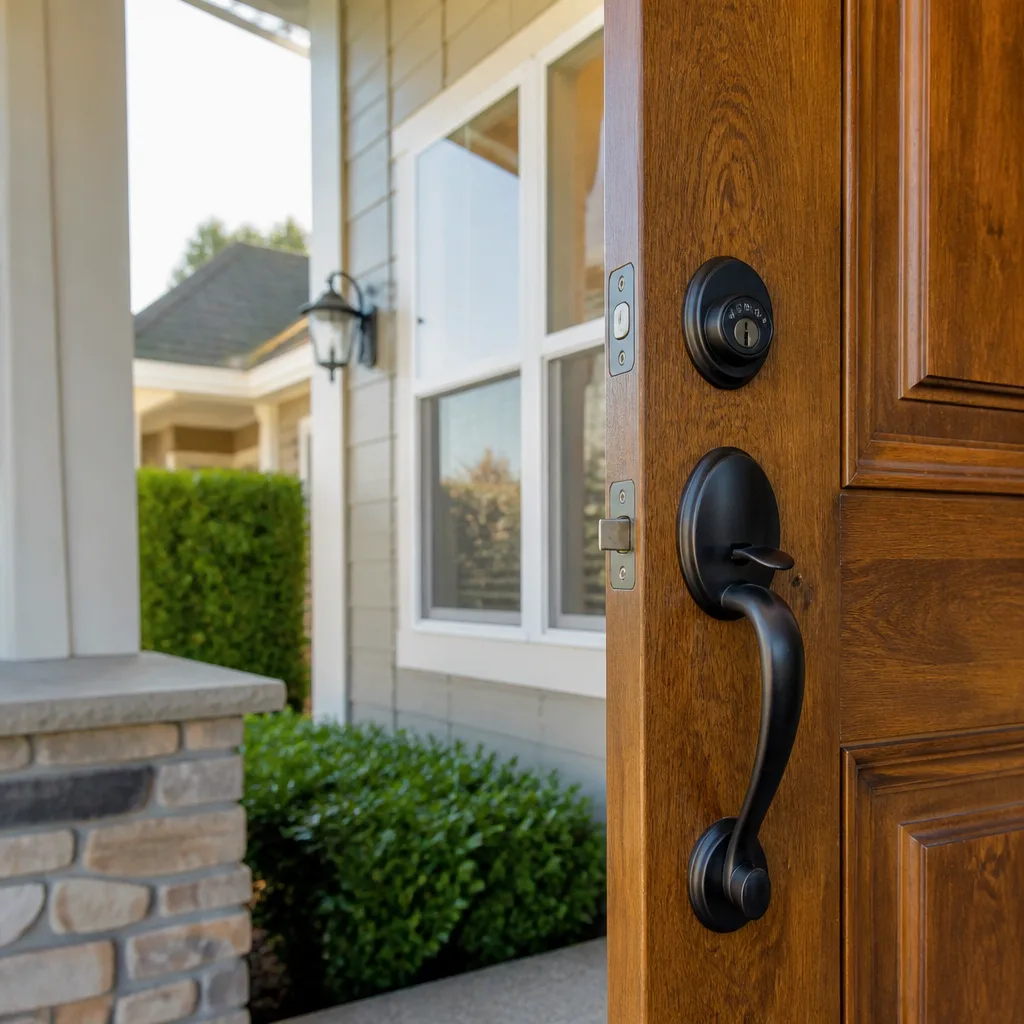
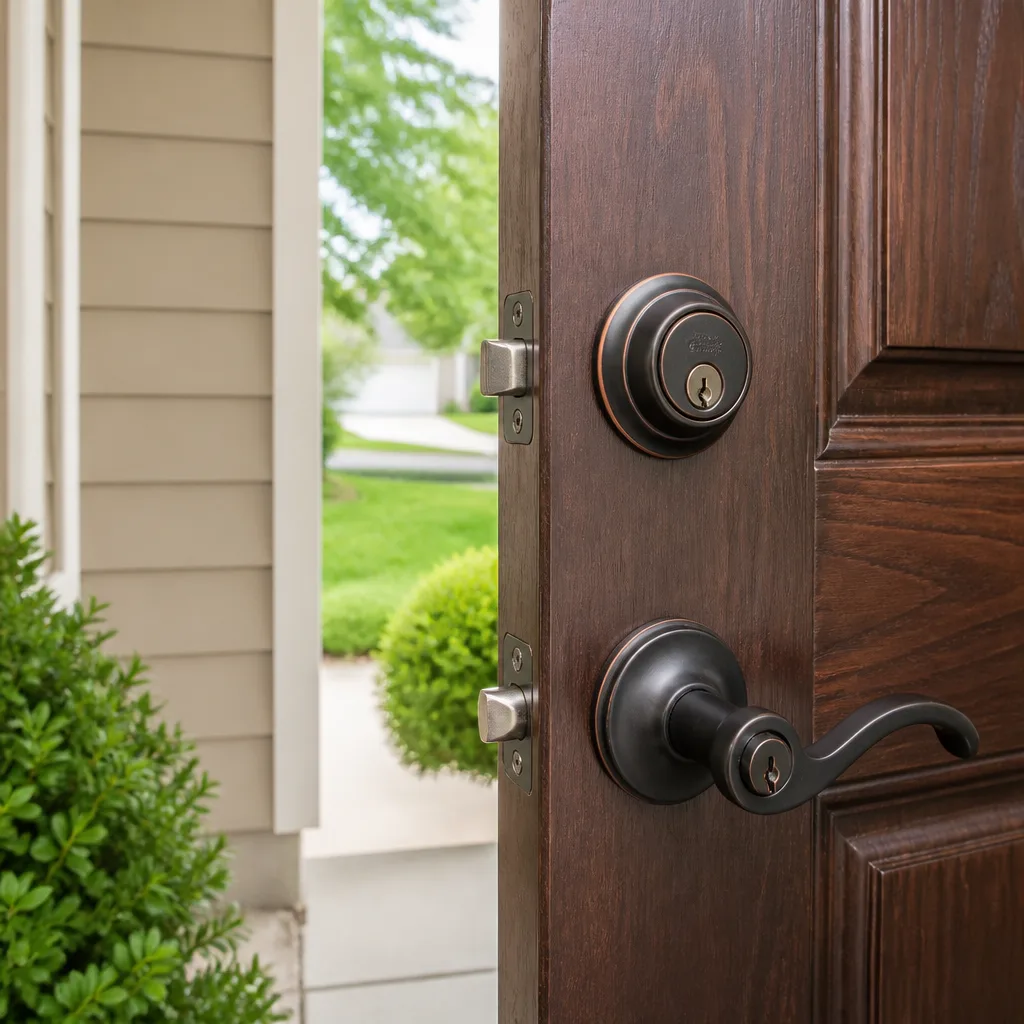
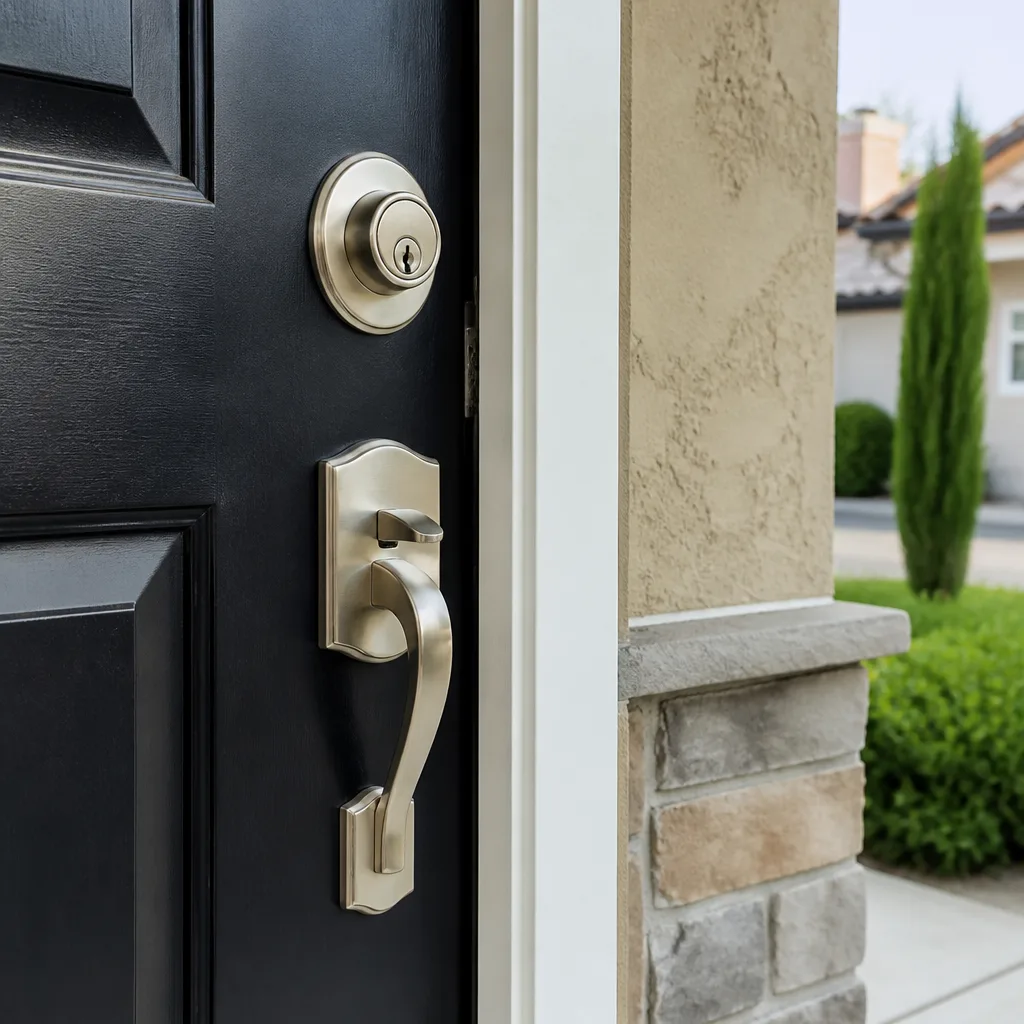
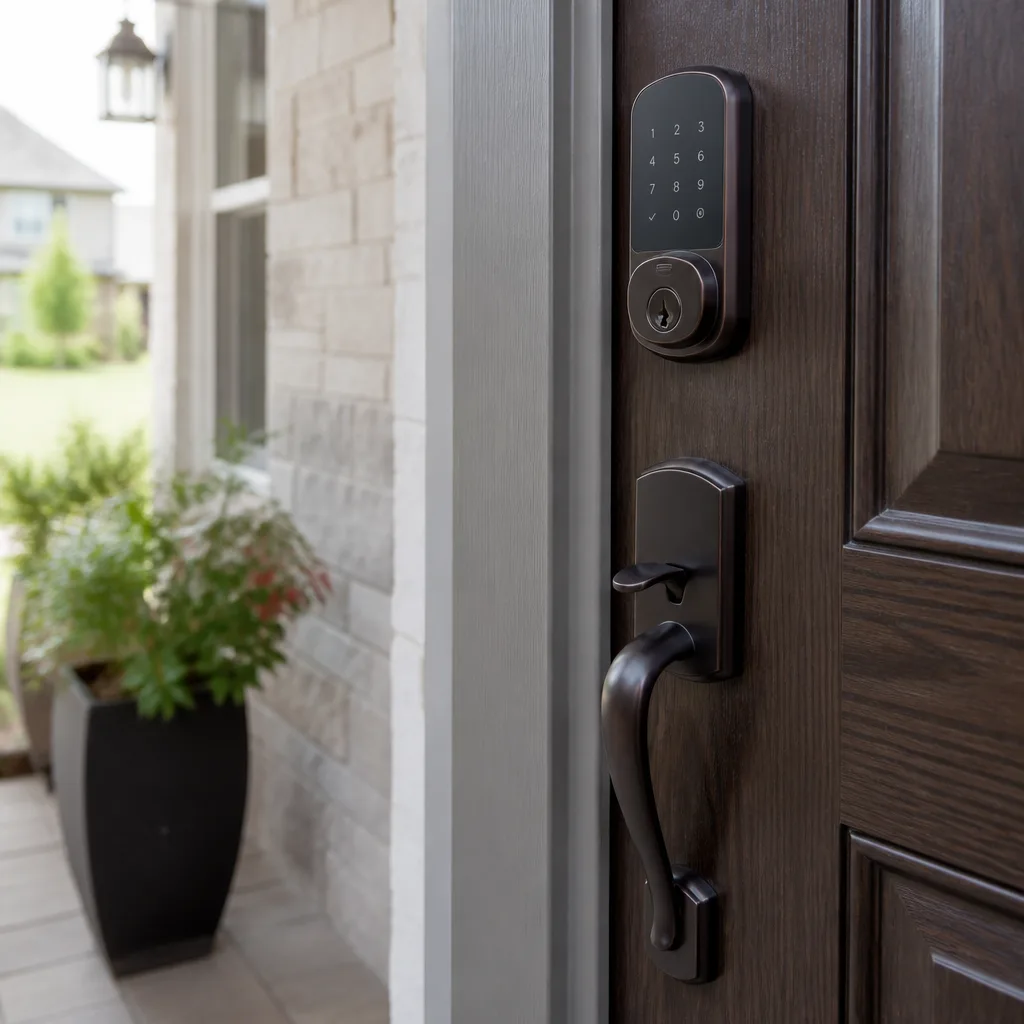
Door Lock Repair Maintenance Schedule: What to Do and When
The part of your door lock that fails first is almost never the part you can see. The tailpiece, a small metal connector between the cylinder and the latch mechanism, wears out silently and gives your key increasingly less to grip until one day the cylinder spins with no result. Meanwhile, the spring inside the latch bolt, the pins in the cylinder, and the screws holding your strike plate each degrade on their own timeline, and none of them send you a warning text before quitting. This guide gives you a component-level maintenance calendar for homes in Los Angeles, where salty coastal air, June gloom humidity, and Santa Ana dust each attack different parts of the lock in different seasons.
Quick Answer
A door lock maintenance schedule that actually works breaks the job into four components, each on its own interval: lubricate the cylinder every 6 months, torque the strike plate screws every 12 months, test the latch bolt every 3 months, and check hinge-to-lock alignment every 6 months or after any visible settling. In Los Angeles, add a deadbolt clearance check in May before June gloom swells wooden doors and a compressed-air cylinder flush in October after Santa Ana winds deposit abrasive grit. Most homeowners can do all of this in under 10 minutes per session without special tools, and the schedule prevents roughly 80% of the lock failures our door lock repair technicians see on service calls.
Table of Contents
- Why Locks Fail: A Component-by-Component Wear Guide
- The Component-Level Maintenance Calendar
- Los Angeles Environmental Triggers: June Gloom and Santa Anas
- The New Key Test: When a Stiff Key Means a Worn Cylinder
- Rental Property Maintenance in LA: Landlord vs. Tenant Duties
- The 30-Second Inspection: How to Build Lock Checks Into Existing Habits
- How to Lubricate a Lock Cylinder Without Making It Worse
- Signs Your Lock Is Failing Faster Than It Should
Why Locks Fail: A Component-by-Component Wear Guide
Most door lock maintenance advice treats the lock as one object: check your locks, lubricate your locks, replace your locks. That framing misses the actual failure mechanics. A lockset has at least four separate wear surfaces, and each one degrades at a different rate for a different reason. If you understand which part wears first and why, the maintenance schedule below stops feeling like a chore list and starts feeling like a map of exactly where your door will eventually fail.
The latch bolt, the spring-loaded angled piece that slides into the strike plate on the door frame, is the most mechanically active part of the lock. Every time you open and close the door, that spring compresses and releases. A home with two adults and two kids might cycle the front door latch 20 to 40 times per day. That is roughly 11,000 to 14,000 cycles per year on a spring that is about the size of a paper clip. Latch springs fail gradually, which is why a door that once closed with a firm snap starts to feel mushy or requires an extra pull to seat fully.
The cylinder, where you insert the key, contains the pin stacks that match your key cuts. Each key insertion pushes those pins up and down against spring pressure. Over years, the key itself acts as a fine file, wearing the brass pins slightly wider and shallower until a key that once worked smoothly starts to catch or requires a jiggle. This is also where environmental contamination does the most damage in Los Angeles. Urban soot, beach salt, and wind-driven dust settle into the keyway and get pressed into the pin chambers with every key turn.
The strike plate, the metal plate screwed into the door frame, is the quiet workhorse. It takes the full force of every door close and every forced entry attempt. The screws holding it are usually only 3/4 inch long, which means they anchor into soft door frame wood rather than the structural stud behind it. As they loosen, the latch bolt gains lateral play, the door starts to rattle, and the deadbolt loses some of its engagement depth. Loose strike plate screws are the single most common finding on our residential service calls in Los Angeles, and they are the easiest one to fix preventatively.
The tailpiece, the small metal bar that connects the back of the cylinder to the latch mechanism, is the silent failure mode. Schlage, Kwikset, and Yale residential locks all use some version of a tailpiece, and the part is usually made of softer stamped steel than the cylinder it connects to. After roughly 100,000 to 150,000 cycles, which for a busy family home takes 10 to 15 years, the tailpiece wears enough that the cylinder spins without fully actuating the latch. To the homeowner, this presents as a key that turns but does not open the door. To the technician, it is a five-minute tailpiece replacement and a good reminder that the rest of the mechanism is due for a check.
Each of these four components, cylinder, latch, strike plate, and tailpiece, has its own failure case. Treating them separately is the only way to maintain them effectively.
The Component-Level Maintenance Calendar
Here is the schedule, organized by component and interval. You do not need special tools. You need about 10 minutes per session, a tube of dry graphite lubricant or a Teflon-based lock lubricant, a Phillips screwdriver, and a damp cloth.
- Latch bolt operation test – every 3 months. Open the door, turn the interior knob or lever, and watch the latch bolt retract fully and spring back sharply when released. If it retracts sluggishly, sticks halfway, or fails to return to full extension without help, the latch spring is wearing. If the door is sagging, the latch may also be dragging against the bottom or side of the strike plate. A sticky latch that does not retract cleanly is a stronger failure signal than most people realize, because it means the spring has lost enough tension that the door no longer latches positively on its own.
- Cylinder lubrication – every 6 months, in May and November. The May session addresses the humidity of June gloom; the November session addresses the dust of October Santa Ana season. More on the technique below, but the short version is: one short puff of dry lubricant into the keyway, insert and remove the key 4 or 5 times, wipe the key, and then wipe the face of the cylinder. That is the entire job. Do this on every door with a keyed entry, including side doors, back doors, and garage entry doors, not just the front door.
- Hinge-to-lock alignment check – every 6 months or after any visible settling. Stand inside the door, close it until the latch bolt touches the strike plate, and look at the vertical alignment. The latch bolt should enter the strike plate hole dead center, with even clearance on both sides. If the door has settled, as Los Angeles doors often do after winter rains move the soil around the foundation, the latch will ride high or low in the strike plate and the deadbolt will start to bind on the edge of its own hole. For doors with visible sag, check the hinge screws for looseness before adjusting anything else. Loose top hinge screws cause most of the misalignment we correct on service calls.
- Strike plate screw torque check – every 12 months. Using a Phillips screwdriver, tighten every screw in every exterior door strike plate. If a screw cannot be tightened because the wood around it has stripped, replace it with a screw at least 2 1/2 to 3 inches long so it anchors into the framing stud behind the jamb. This one upgrade doubles the force required to kick the door open, and it costs about three dollars. In rental properties, this is a maintenance item worth requesting in writing, see below. Do the same screw check on the hinges while you are there.
- Deadbolt clearance and throw test – every 6 months, with extra attention in late May in Los Angeles. With the door open, turn the deadbolt key or the interior thumb turn and watch the bolt slide to full extension. Then close the door and throw the deadbolt. It should seat fully into the strike plate without you having to pull, push, or lift the door. If the bolt stops partway or requires force, the door has shifted and the deadbolt hole in the frame is no longer aligned with the bolt path. This matters more than most people think: a deadbolt that is only half-thrown is a deadbolt that is carrying its load on half its bolt length, which significantly reduces break-in resistance.
Calendar anchor points: use the first weekend of March, the last weekend of May, the first weekend of October, and the last weekend of November. That spacing takes care of the quarterly latch test, the semiannual cylinder lubrication and alignment check, and the annual screw torque check. If you attach each session to an existing routine, like the first time you barbecue in spring or the weekend you put up or take down holiday decorations, the schedule becomes self-sustaining.
Los Angeles Environmental Triggers: June Gloom and Santa Anas
Los Angeles has two seasonal weather patterns that accelerate lock wear in ways most national maintenance guides never mention. If you live in or near Los Angeles, these are your most important maintenance calendar entries.
The first is June gloom, the marine layer that sits over the Los Angeles basin from late May through early July. The air carries enough humidity to swell wooden doors measurably. A door that fits cleanly in January can bind against the frame by the first week of June, and the deadbolt throw becomes shorter as the bolt path moves slightly out of line. We recommend checking deadbolt clearance on all exterior doors during the last week of May. If the bolt is already starting to drag, the fix is usually a strike plate adjustment rather than a lock replacement, but catching it early keeps the warranty from being your only fallback, and it keeps you from discovering the problem at midnight when the door will not latch at all. For door lock repair warning signs every homeowner should know, review our guide before symptoms escalate.
The second is Santa Ana season, the dry offshore winds that blow from October into November. Santa Ana winds carry dust, grit, and fine particulate from the inland deserts, and the dust settles everywhere, including inside your lock cylinders. Once inside the keyway, the particles act as an abrasive paste that wears down the brass pins every time you use the key. This is why we recommend a compressed-air flush, followed by a quick shot of dry lubricant, every October after the first Santa Ana event of the season. The flush pushes the abrasive grit out of the keyway; the lubricant then leaves a dry film that keeps new particles from adhering. This sequence takes 60 seconds per door.
There is a third Los Angeles-specific factor that does not show up on the maintenance calendar but affects every schedule: the prevalence of older pre-war and mid-century homes. Many Los Angeles homes still have their original door frames, which were built for locks with shorter tailpieces and thinner strike plates. When those homes shift, as they do when the dry season contracts the clay soil, the frames flex and the original strike plates deform. If you live in a home built before 1960, your screw torque checks matter more than your cylinder lubrication, because frame movement is the most likely source of lock problems in older construction.
The New Key Test: When a Stiff Key Means a Worn Cylinder
One of the most common maintenance misdiagnoses we see in Los Angeles starts with a new key. A homeowner loses a key, gets a duplicate cut at a hardware store, and finds that the new key is stiff going in, hard to turn, or difficult to extract. The natural assumption is that the new key was cut wrong. Sometimes it was. But more often, the stiff new key is a diagnostic finding: the cylinder is worn, and the fresh key is exposing it.
Here is the mechanism. Your old keys wear down slowly alongside the cylinder pins, so the two surfaces adapt to each other over thousands of insertions. A freshly cut key has full-height cuts that engage the worn pins more forcefully, and the key itself has sharp edges and a full-width blank that exposes every bit of looseness in the cylinder. If a new key catches, grinds, or resists extraction in a lock where the old key worked, the cylinder is the problem, not the duplicate.
Here is the test: insert the new key slowly. If it slides in with resistance at multiple points along its length, there is pin wear or debris in the cylinder. Then rotate the key slowly without turning the knob. If the rotation feels gritty or catches at any point in the arc, the pin chambers are contaminated. Then try the old key, if you still have it. If the old key also feels rougher than it did a year ago, the cylinder is actively wearing. None of these are indications that the key is cut wrong. They are indications that the cylinder needs service before the wear progresses to a full failure. See our Door Lock Repair Troubleshooting: Common Problems and How to Fix Them for step-by-step diagnostics. A cylinder that fails from pin wear will eventually refuse to turn at all, and that failure tends to happen on the day you are running late for something important.
What to do with this information: if the new key is stiff, the first move is a cylinder flush with compressed air and a proper dry lubricant application. If the problem persists after that, the pin wear has progressed beyond what maintenance can correct, and the cylinder needs repinning or replacement. On Schlage and Kwikset residential hardware, repinning is a common fix, and it costs significantly less than replacing the entire lockset. On higher-security hardware like Medeco or Yale commercial cylinders, repinning is also standard practice, but the parts and labor differ enough that the repair should be quoted on the spot before any work begins.
Rental Property Maintenance in LA: Landlord vs. Tenant Duties
In Los Angeles, door locks on rental properties fall under the California implied warranty of habitability, which means the landlord must maintain the unit in a condition fit for habitation. Door locks are part of that, and if a lock fails, the landlord is legally required to repair or replace it. The question is less about who is responsible and more about how fast the repair happens, and that is where tenants benefit from knowing the specifics.
California Civil Code Section 1941.1 covers the landlord’s duty to maintain the property, and while it does not list door locks by name, the courts have consistently interpreted the standard to include functioning exterior door locks. Non-functioning locks are a safety defect, not a cosmetic one. In practice, the practical standard is that a broken or failing lock should be repaired within a reasonable time, which courts have interpreted as anywhere from 24 hours for an obvious security failure to 30 days for non-emergency repairs. A lock that is starting to stick but still functions falls on the longer end of that range, but a deadbolt that will not throw at all is an emergency.
For tenants, the most useful step is to put the request in writing and keep a copy. Here is the language that works best, because it frames the issue as a safety matter and creates a paper trail:
“I am requesting professional servicing of the [front/back/side] door lock at [address] because [describe the specific failure: deadbolt will not fully throw, latch does not retract smoothly, key sticks in cylinder]. This condition affects the security of the unit. Please schedule a licensed locksmith to inspect and repair or replace the lock. I understand that California’s warranty of habitability requires functional locks on all exterior doors.”
What a tenant can be asked to do: basic cleaning, like wiping down the exterior hardware, and normal use. What a tenant should not be asked to do: adjust or repair the internal lock mechanism, which is the landlord’s responsibility. If the landlord asks you to fix it yourself and deduct the cost from rent, that is called repair-and-deduct, and it comes with specific legal procedures under California law, including getting a professional estimate before doing any work. In Los Angeles, where many rental units remain rent-controlled and tenant protections are strong, documenting every communication about lock maintenance protects you if the problem recurs or worsens. For more guides & resources on tenant rights and lock maintenance, visit our blog.
If you are a landlord in Los Angeles, the maintenance schedule above is the cheapest insurance you can buy. A quarterly latch test and a semiannual cylinder lubrication take under an hour per year and prevent the 10pm emergency call from a tenant whose lock just failed. For rental units, we recommend doing the full calendar check during the unit turnover, then scheduling the tenant’s own quarterly check as part of their move-in documentation.
The 30-Second Inspection: How to Build Lock Checks Into Existing Habits
The most carefully designed maintenance calendar is still worthless if you forget to do it. The behavioral design trick that works for most people is not setting reminders; it is attaching the lock check to an existing habit that already happens daily or weekly. Here are three that work in Los Angeles homes.
Attach the latch bolt test to taking out the trash. You already touch the door to take the trash out. When you do, take five extra seconds to turn the knob and watch the bolt retract and spring back. If it sticks or fails to spring back fully, you have caught a failing spring months before it turns into a lock that will not latch. This is the most reliable test because it requires no tools and no extra trip to the door.
Attach the hinge and alignment check to checking the mail. You already walk past the door on mail days. Once a week, run your finger around the top and side gaps while the door is closed and look at whether the gap is even. A door that has shifted will show a wider gap at the top on one side and a narrower gap at the bottom. Most Los Angeles single-family homes sit on concrete slab foundations or raised foundations, and the difference between the two determines how much the door frame shifts seasonally. Raised foundations settle more, which makes the weekly visual check more important in older neighborhoods like the older streets of Los Angeles where pier and beam construction is common.
The full 30-second inspection, for when you want a cleaner checklist:
- Duration: 30 seconds per door, once per month.
- Step 1: Close and latch the door. Look at the gap around the door. Even gap? Good. Uneven gap? Note it and check the hinges this week.
- Step 2: Turn the interior knob and watch the latch bolt. Retracts fully and springs back sharply? Good. Sluggish or sticky? Put cylinder lubrication and latch inspection on the calendar.
- Step 3: Thumb the deadbolt. Throws full extension without resistance? Good. Half-throw or drag? Schedule a strike plate adjustment before the season gets worse.
- Step 4: Try the key in each keyed lock, stopping halfway through the rotation to check for grit. Smooth? Good. Gritty? Compressed-air flush and dry lubricant, same day if possible.
That is the whole inspection. Thirty seconds, once per month, attached to a habit you already have. If you have never done any lock maintenance before, start with this inspection for the first month before committing to the full calendar, because it teaches you which of your locks need attention and which are already in good shape.
How to Lubricate a Lock Cylinder Without Making It Worse
The most common maintenance mistake we see in Los Angeles, and in our Door Lock Repair in Los Angeles service area, is using the wrong product to lubricate a cylinder. WD-40 and similar penetrating oils are made to break through rust and then evaporate. They leave behind a thin residue that attracts dust and gradually thickens inside the pin chambers. In Santa Ana country, where the air is already carrying fine grit, a WD-40-treated cylinder becomes a dust trap within weeks. The oil turns into a sticky paste, the pins start to catch, and the lock ends up worse than it was before the lubrication.
What to use instead: a dry graphite lubricant, sold in small tubes at hardware stores, or a Teflon-based dry-film lock lubricant. Both are designed specifically for locks, and both go on wet and dry to a film that does not attract dust. The application sequence that works:
- Insert the nozzle into the keyway and give one short puff. A single short puff is enough. Over-lubricating fills the pin chambers with excess material that will bind the pins.
- Insert the key fully and remove it slowly, repeating 4 to 5 times. This works the lubricant through the pin stacks.
- Wipe the key clean after each withdrawal. You will see dark residue come off, which is the old contamination plus the new lubricant carrying it out.
- Wipe the face of the cylinder with a dry cloth.
- Test the key turn. It should feel noticeably smoother through the full rotation.
If the cylinder has not been lubricated in years and feels gritty even after this treatment, the contamination may have already scored the pins. In that case, lubrication alone will not restore smooth operation, and the cylinder needs repinning to replace the worn pins and re-seat the springs. Repinning is what the locksmith trade calls changing the internal pins so your old keys no longer work; on a Schlage or Kwikset cylinder, it is the Dunmore Locksmith home team’s most common repair. For a worn cylinder that has not yet failed completely, repinning is the repair that restores full smoothness at half the cost of replacing the whole lockset.
Signs Your Lock Is Failing Faster Than It Should
The maintenance calendar catches most wear before it becomes failure, but some locks degrade faster than the schedule anticipates. Here are the signs that a lock is failing on an accelerated timeline, with the likely cause for each.
- The key turns but the door does not open. This is the classic tailpiece failure described in the introduction. The cylinder rotates, the tailpiece spins without engaging the latch, and nothing happens. It is a five-minute repair for a professional, but it feels like a total lock failure to the person standing outside.
- The key becomes progressively harder to insert and remove over a period of weeks or months. This is cylinder wear, not key wear, and it means the pins are degrading from contamination or normal use. Address it before the cylinder seizes entirely.
- The door latch catches but does not seat fully without a push or pull. This is a spring fatigue signal, and it means the latch bolt no longer has enough tension to seat on its own. The door will eventually fail to stay closed, which is a security failure in addition to an inconvenience.
- The deadbolt throw is getting shorter over time. A deadbolt that used to extend fully and now stops at half-throw is telling you the door and frame are moving relative to each other. That movement will only increase through the wet-dry cycle of Los Angeles seasons.
- The door rattles in the frame when closed. Loose strike plate screws or loose hinge screws. The fix is often as simple as replacing screws with longer ones that bite into the framing stud, as described above in the calendar.
Each of these is a maintenance finding, not a reason to panic. The point of the schedule is to catch them at this stage, when repair is cheap and scheduled, rather than at the 10pm emergency stage, when the call costs more and the lock usually needs replacement rather than service.
If you are in Los Angeles and you want a professional check rather than doing the calendar yourself, we do that. The inspection is free and the quote is in writing before any work begins. See our Residential Locksmith in Los Angeles page for the full service breakdown, or our Change Door Locks in Los Angeles page if you have decided that replacement is the better path.
Common Mistakes to Avoid
- Using penetrating oil in a lock cylinder. WD-40 and similar products are water displacers, not lock lubricants. They leave a residue that attracts the exact dust Santa Ana winds carry into Los Angeles cylinders every October. Use a dry graphite or Teflon-based lock lubricant instead, and never anything with oil in the name.
- Doing the annual check but skipping the quarterly latch test. The latch spring is the part with the highest cycle count, so it is the part that fails first in most homes. A forty-second test every three months catches the failure before it strands you.
- Replacing the whole lockset when the cylinder just needs repinning. A worn cylinder on a Schlage or Kwikset lock is usually repairable by repinning, at a fraction of the cost of replacement hardware. The full replacement only makes sense when the finish is worn enough to matter aesthetically or the internal mechanism has damage beyond the pins.
- Handling landlord-tenant lock repairs verbally. In Los Angeles, verbal agreements about lock repairs create exactly zero legal protection for either party. Put it in writing, even a text message, with the specific failure and the date it was reported. If the lock later fails and the repair was never documented, the tenant has no paper trail and the landlord has no record of diligence.
- Ignoring a stiff new key and blaming the hardware store instead. The new key test described above is a diagnostic instrument. If the newly cut key feels rough, the cylinder is telling you something about its condition. The duplicate might also be cut wrong, but you cannot know until you check both, and the cylinder is the more likely culprit for a full-length gritty feel.
- Tightening screws without checking the alignment first. Tightening a loose strike plate screw on a door that has already shifted will sometimes seat the plate further out of line with the bolt path. Check the alignment, then tighten, then re-check the throw.
- Treating all exterior doors the same. The front door is the one people think about, but the back door, side door, and garage entry door are usually the ones with more exposure to sun, more daily use, and less maintenance attention. Run the full schedule on every keyed exterior door, not just the one guests see.
When to Call a Professional
Some conditions are beyond what the quarterly and semiannual checklists can address. Call a locksmith if the key turns without opening the door, which indicates a tailpiece failure; if the cylinder is gritty after a proper lubrication and flush, which means the pins are scored; if the deadbolt will not throw at all, which is an emergency security failure; if the door has shifted enough that the lock no longer aligns, which usually requires strike plate or frame work; or if you have a rental unit where the lock is failing and the documentation trail is starting. In each case, a trained technician can diagnose the specific component failure and repair it before the failure cascades. Dunmore Locksmith offers free estimates in Los Angeles, call (910) 714-4287.
Frequently Asked Questions
Lubricate the cylinder every 6 months with a dry graphite or Teflon-based lubricant, and add an extra session in late October in Los Angeles after the first Santa Ana winds deposit grit in the keyways. One short puff into the keyway, four or five key insertions to work it through, then wipe the key and cylinder face clean. Never use WD-40 or any penetrating oil. For exact pricing on a cylinder flush and repin if the lock is beyond lubrication, call (910) 714-4287 and we will quote it in writing before any work starts.
Yes. We service and install Schlage, Kwikset, Medeco, Yale, and other major brands on residential doors throughout Los Angeles. If you have a cylinder that needs repinning or a lockset that needs replacement, we will tell you whether repair or replacement is the better value. The quote is in writing before any work begins, and the repair is covered by the 365-Day Done Right Promise: if it fails, we return at no charge.
Door lock repair in Los Angeles typically runs $85 to $175 for a basic cylinder repin on standard Schlage or Kwikset hardware, $65 to $120 for a latch bolt replacement, and $150 to $300 for a full lockset replacement depending on the hardware grade. The exact price depends on the lock brand, the specific component that failed, and whether the door frame needs adjustment. We deliver the full price in writing before any work begins, and that is the price on the invoice with no additions on arrival. For an exact quote on your lock, call (910) 714-4287, estimates are free.
You can meaningfully slow the failure rate. The Los Angeles-specific schedule is a deadbolt clearance check at the end of May before June gloom swells the doors, and a compressed-air cylinder flush in October after the first Santa Ana event. The rest of the calendar, quarterly latch tests and annual screw torque checks, handles the wear that happens regardless of weather. Together, the full schedule prevents most of the failures that lead to emergency calls.
The signal for repair is a single component failure: a stiff key that is isolated to a worn cylinder, a latch that no longer springs back, or a tailpiece that has worn. Repairs address one component. The signal for replacement is multiple simultaneous problems or visible finish wear that matters aesthetically. A trained locksmith can tell you which one you have in about five minutes, and in Los Angeles, the inspection is free. Call (910) 714-4287 for a free estimate.
Yes. The price is delivered in writing before any work begins, it is the same price on the invoice, and there is no call-out surcharge added on arrival. We quote the full job price, including parts and labor, before anyone dispatches. This is the standard we have operated under since 2007 as part of the Threshold Group network, and it is written into every job we do. For a free, firm estimate in Los Angeles, call (910) 714-4287.
The Bottom Line
Door locks fail component by component, not all at once, and the maintenance schedule that respects that reality is the one that actually gets done. Lubricate the cylinder every 6 months, torque the strike plate screws every 12 months, test the latch bolt every 3 months, and check hinge-to-lock alignment every 6 months. In Los Angeles, add the May deadbolt clearance check and the October compressed-air flush to account for June gloom and Santa Ana dust. The new key test turns every hardware-store duplicate into a free cylinder diagnosis, and the 30-second monthly inspection anchors the schedule to habits you already have. Most lock failures are preventable with 10 minutes per session and the right materials, and for everything else, the Door Lock Repair in Los Angeles team at Dunmore Locksmith handles repair, repinning, and replacement with written pricing and a 365-day guarantee.
Written by Perry Osgood, Owner at Dunmore Locksmith, serving Los Angeles since 2007.