
Last updated October 8, 2026
Non-destructive entry first, always - and we re-key Schlage, Kwikset, and Baldwin locks on the spot while you watch
You get a price before we start. It does not change when we arrive. No surprises.
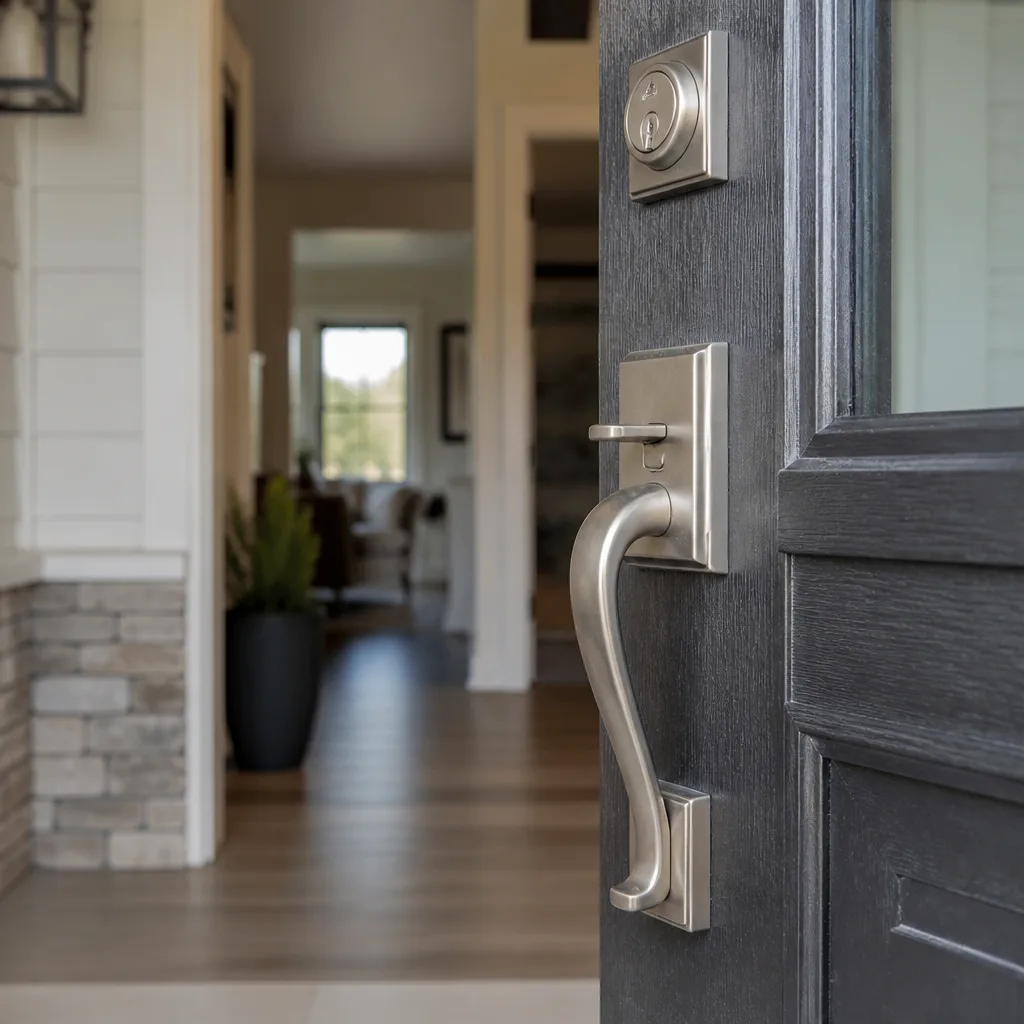
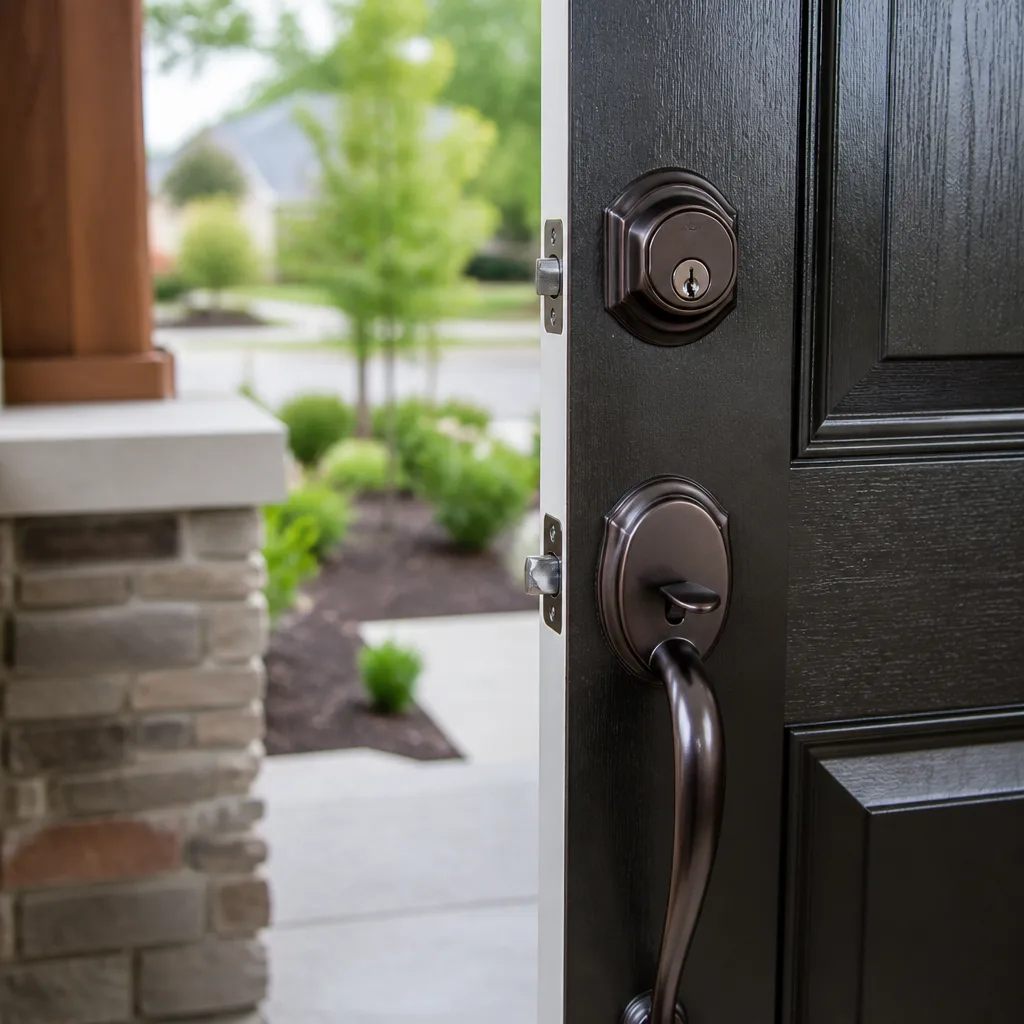
DIY vs Professional Door Lock Repair: What’s Safe to Do Yourself
Here’s a statistic that doesn’t get published: a homeowner who successfully swaps out their own latch bolt assembly 19 times in a row still faces one scenario where it goes wrong, and that 20th time, if it involves a door that won’t lock from the inside, creates a genuine overnight safety exposure. We’ve been offering our Door Lock Repair services across Los Angeles since 2007, and we’ve never once been called to fix a lock that failed because the homeowner was careless. We get called because the repair looked simpler than it was. This guide walks through which door lock repairs you can realistically handle yourself, which ones carry hidden structural risk, and how to know the difference before you start loosening screws.
Quick Answer
Three door lock repairs are genuinely safe for most homeowners: tightening loose handle screws, adjusting a strike plate position within an existing mortise, and replacing a matching interior knob on a door that is not an exterior door. Almost everything else involving a deadbolt, an exterior door, a multi-point lock, or a door that doesn’t hang square carries failure modes that can leave you with a door you cannot secure at all. The deciding question is not whether you can learn the repair, but whether a failed attempt leaves you with a minor imperfection or an unsecurable door overnight.
Table of Contents
- The Consequence Matrix: What a Failed DIY Repair Actually Produces
- The Three Door Lock Repairs That Are Genuinely Low-Risk DIY
- Repairs That Look Simple But Carry Hidden Structural Risk
- Tool Requirements That Reveal Repair Complexity
- The Middle Path: Partial DIY With a Professional Check
- What Los Angeles Homeowners Specifically Need to Know
- Common Mistakes to Avoid
- When to Call a Professional
The Consequence Matrix: What a Failed DIY Repair Actually Produces
Before we get into which repairs are safe, we need to reframe the question. Almost any lock repair is technically learnable. YouTube has thousands of tutorials, hardware stores stock the parts, and a determined homeowner can figure out a surprising amount. The right question is not “Can I fix this myself?” The right question is “What happens if I fix this wrong?”
Door lock failures are not all created equal. Some leave you with a door that works fine but looks slightly off. Others leave you with a door that physically cannot lock, which means your home is unsecured until a professional arrives. In Los Angeles, where many homes sit empty during weekday work hours, an unsecurable door is not a minor inconvenience. It’s an active exposure.
Here is the consequence matrix we use when talking to Los Angeles homeowners who call us after a DIY attempt went sideways:
- Loose handle screws tightened incorrectly: Worst case is a stripped screw hole or a misaligned handle that still functions. The door remains securable. Low consequence.
- Strike plate adjusted within the existing mortise: Worst case is a latch that binds slightly or a plate that sits a millimeter proud of the door frame. The door still locks, though it may require a firmer push. Low consequence.
- Interior knob replaced on a non-exterior door: Worst case is a knob that doesn’t seat correctly, a spindle misalignment, or a privacy lock that doesn’t engage. The room’s door can’t be locked, but the home’s exterior is unaffected. Low consequence.
- Deadbolt replaced on an exterior door: Worst case is a misaligned bolt that won’t fully throw, a hole drilled off-center that weakens the door stile, or a strike plate that’s off by a quarter inch, leaving the deadbolt useless. The home’s primary security point is compromised. High consequence.
- Lock repaired on a door with a cracked frame: Worst case is the crack widening under screw torque, the strike plate pulling free, and the entire jamb losing structural integrity. The door cannot be secured without frame repair. High consequence.
- Multi-point locking system touched without alignment tools: Worst case is a door that appears locked but has only one of three or five points engaged, or a mechanism that jams in the locked position, trapping you inside or outside. This is a genuinely dangerous outcome. Severe consequence.
The pattern is clear. Interior cosmetic and convenience repairs fail with low consequence. Exterior security repairs fail with high consequence. That distinction, more than any tutorial’s difficulty rating, is what should guide your decision.
The Three Door Lock Repairs That Are Genuinely Low-Risk DIY
We’re not going to tell you every lock repair requires a professional. That’s false, and homeowners who hear it stop listening. There are three repairs where the failure modes are so mild that a careful homeowner should absolutely try them first.
1. Tightening Loose Handle Screws
Door handles loosen over time because every open-and-close cycle applies torque to the mounting hardware. On older Los Angeles homes, especially in neighborhoods like Silver Lake, Echo Park, and the postwar tracts of the San Fernando Valley, wood frames have expanded and contracted through decades of dry summers and wet winters, which accelerates screw loosening. The fix is straightforward: locate the set screws on the handle’s interior rose or faceplate, tighten them with the correct hex key or Phillips driver, and test the handle. If the screw spins without catching, the hole is stripped, and that’s a five-minute job with a toothpick and wood glue or a slightly longer job with a proper wood filler. None of these failures leave your exterior door unlocked.
2. Adjusting Strike Plate Position Within the Existing Mortise
If your deadbolt or latch requires a shove to fully engage, the strike plate is often the culprit. The plate sits in a mortise, a shallow recess chiseled into the door frame, and over time the door may sag enough that the bolt no longer aligns cleanly. The low-risk fix is to loosen the two screws holding the plate, shift it a millimeter or two in the direction the bolt needs, and retighten. If the plate moves within the existing mortise and the bolt now throws cleanly, you’ve solved the problem without touching the door itself. This is the single most common repair we talk Los Angeles homeowners through over the phone, because in most cases they can do it themselves and it saves them a service call.
3. Replacing a Matching Interior Knob on a Non-Exterior Door
Interior knobs on bedroom and bathroom doors fail more often than exterior hardware, largely because they see more daily cycles. Replacing an interior knob is genuinely DIY-friendly for one simple reason: if the new knob doesn’t seat correctly, the consequence is a bedroom door that won’t lock, not a home that won’t lock. The process is self-contained, all parts come pre-assembled, and the only tools are typically a Phillips screwdriver and patience. The one caveat: buy a knob with the same backset, the distance from the door edge to the center of the bore hole. Most American doors use either 2-3/8 inches or 2-3/4 inches, and mismatching them means the knob’s latch won’t line up. Measure before you buy.
Repairs That Look Simple But Carry Hidden Structural Risk
Now for the repairs that seduce homeowners with apparent simplicity. They look like the low-risk jobs above. They are not. The difference is that these repairs interact with the door’s structural integrity, and a mistake compromises more than the hardware.
Replacing a Deadbolt on a Door With a Cracked Frame
We see this all the time in Los Angeles, where mid-century homes in neighborhoods like Westchester, Mar Vista, and the Crenshaw district have door frames that predate modern security hardware. When a deadbolt is replaced, the installation requires tightening screws into the door frame through the strike plate. If the frame already has a crack, hairline or otherwise, that screw torque can split the frame further. The result is a strike plate that pulls free, a deadbolt that won’t engage, and a door that cannot be locked from the outside. The repair itself wasn’t hard. The condition of the door frame made it dangerous. Before you replace a deadbolt, inspect the area around the strike plate and the door jamb for any cracking. If you see it, the job has moved from hardware replacement to structural repair, and that changes everything.
Repairing a Lock on a Door That Doesn’t Hang Plumb
Doors settle. Hinges wear. Foundations shift, particularly in Los Angeles, where seismic activity and expansive clay soil in neighborhoods like North Hollywood and Van Nuys cause foundations to move in ways East Coast construction rarely experiences. When a door doesn’t hang plumb, meaning it’s no longer perfectly vertical in its frame, the lock’s bolt and the strike plate occupy slightly different planes. Replacing the lock doesn’t fix that. You can install the most expensive deadbolt in the world, and it will still bind if the door has shifted out of square. The correct repair involves realigning the hinges, re-mortising the strike plate, or in severe cases re-hanging the door entirely. That is carpentry as much as locksmithing, and it requires tools and experience most homeowners don’t have.
Working on a Multi-Point Locking System Without Alignment Tools
Multi-point locks, common on newer Los Angeles condos and townhouses and increasingly on high-end single-family homes in Bel Air, Brentwood, and Pacific Palisades, engage at three or five points along the door’s edge when you lift the handle. They’re wonderful systems when they work. When they don’t, they’re unforgiving. A multi-point lock that has drifted out of alignment may engage only the top or bottom bolt while the center stays retracted, which gives the illusion of a locked door. Worse, a badly misaligned multi-point mechanism can jam in the locked position, which is a serious problem when you’re inside with a jammed door and no exit. These systems require alignment tools, manufacturer-specific adjustments, and a working knowledge of how the gearbox translates handle movement into bolt engagement. This is not a screwdriver job. When we receive calls about multi-point issues in Los Angeles, it’s usually because a homeowner attempted a YouTube fix and the mechanism is now seized. The repair bill is typically higher than it would have been if we’d been called first, because we have to undo the attempt before we can diagnose the original problem.
Tool Requirements That Reveal Repair Complexity
There’s a simple heuristic we use when homeowners ask whether a particular repair is DIY-appropriate: look at the tool list. Tool requirements are a reliable proxy for repair complexity, because they tell you what the manufacturer assumed the installer would have on hand.
If the correct repair requires only a Phillips screwdriver and a few minutes, the job is genuinely DIY-friendly. Tightening handle screws, adjusting a strike plate within its mortise, replacing a matching interior knob. These are the repairs above.
If the correct repair requires a combination square, the job involves precise alignment. A combination square is used to ensure that a deadbolt’s faceplate sits perpendicular to the door edge, that a strike plate aligns with the bore center, and that everything sits flush. Homeowners who don’t own a combination square, and who aren’t practiced in using one, tend to eyeball these measurements. Eyeballing door hardware alignment is how you get a deadbolt that binds on every throw.
If the correct repair requires a mortising chisel, the job involves cutting wood. Enlarging a strike plate mortise, deepening a deadbolt pocket, or squaring off a rough bore requires actual carpentry skill. A mortising chisel in unpracticed hands produces splintered door frames, oversized holes, and strike plates that sit too deep to catch the bolt. We’ve replaced several door frames in Los Angeles where the original damage was caused by a chisel, not by the lock failure that prompted the repair.
If the correct repair requires a hole saw jig, the job involves cutting a new hole in a door, and that hole must be centered, perpendicular, and correctly sized. Hole saw jigs clamp to the door and guide the saw, but they are not foolproof. A hole drilled at a slight angle produces a bolt that doesn’t align with the strike plate no matter how much you adjust it. At that point, the door itself may be ruined.
The pattern: screwdriver jobs are safe. Alignment jobs are achievable with care. Wood-cutting and hole-drilling jobs are where we recommend a professional, because the cost of replacement on a damaged door or frame exceeds the cost of getting the repair done right the first time.
The Middle Path: Partial DIY With a Professional Check
There’s a third option between fully DIY and fully professional that most homeowners don’t consider: do the diagnostic work and preparation yourself, then have a locksmith complete and verify the security-critical steps. This saves money without sacrificing safety, and it’s a model we’ve supported in Los Angeles for years.
Here’s how a partial DIY typically works.
- You diagnose the problem. Identify exactly what’s failing: is it the handle, the latch, the deadbolt, the strike plate, the alignment, or something else? The more precise your diagnosis, the more time you save. Every minute a technician spends diagnosing is a minute you’re paying for.
- You gather the parts. If you know you need a new deadbolt, buy the deadbolt. If you’re replacing a knob, buy the knob with the correct backset. Buying parts yourself at market price often saves a material markup. Just be sure you’re buying a brand a locksmith will actually install. We service Yale, Baldwin, Mul-T-Lock, and Sargent hardware among others, and a professional is always happier working with quality hardware than with a discount-store import.
- You remove the old hardware carefully. This is where partial DIY gets slightly riskier, but the risk is manageable: take photos of every step as you disassemble, keep all screws and components organized in a small container, and don’t force anything. If a screw resists, stop. Forced screws strip, and stripped screws turn a simple job into extraction work.
- A locksmith completes the installation and verifies it. You call a professional to install the new hardware, verify alignment, test every function, and document the work. The cost is lower than a full-service visit because the diagnosis and disassembly are done. But the security-critical steps, the ones where failure means an unsecurable door, are handled by someone who does this professionally.
- You keep the documentation. Any reputable locksmith will give you a written description of what was done and what was verified. At Dunmore Locksmith, every job includes a written guarantee, and we document the work on your invoice.
This middle path is especially popular among Los Angeles homeowners who are handy but cautious. It works well for deadbolt replacements, handle set replacements, and even some smart lock installations. The key is being honest about where your preparation ends and professional installation should begin.
What Los Angeles Homeowners Specifically Need to Know
Door lock repair in Los Angeles operates under conditions that rarely appear in generic DIY content written for a national audience. Here’s what actually matters here.
Climate and wood movement. Los Angeles has a Mediterranean climate with dry summers and wetter winters, and while we don’t experience the humidity swings of the Southeast, our older homes have endured decades of seasonal expansion and contraction. Wood door frames in neighborhoods like Hancock Park, Miracle Mile, and the historic districts of Pasadena have moved measurably over 60, 80, or 100 years. This matters because a strike plate that was perfectly aligned in 1985 may now sit a full 1/8 inch out of position. Generic DIY advice that assumes a plumb frame and a square door often fails on older Los Angeles homes.
Seismic activity. Los Angeles rests on the Pacific Ring of Fire, and even minor earthquakes shift door frames. A lock that worked fine last month may bind today because the frame moved during a small tremor. If your lock suddenly fails after seismic activity, the problem is likely the door alignment, not the lock itself. Replacing the lock won’t fix it, and adjusting the strike plate is a temporary bandage. The correct repair is frame realignment, which is professional work.
Rental and condo restrictions. A significant portion of Los Angeles housing is rentals and HOAs. If you rent, check your lease before doing any lock work; many Los Angeles landlords have specific procedures for lock changes and rekeying, and improperly performed work can cost you your security deposit. If you own a condo, your HOA may have rules about exterior hardware appearance, and multi-point locks on exterior doors are often the HOA’s responsibility, not yours. Know who owns the door before you touch it.
Security standards are higher here. Los Angeles property crime rates mean that exterior door security is not a casual concern. A deadbolt that half-throws, a strike plate held by short screws instead of 3-inch screws that bite into the door frame’s structural stud, a door that closes but doesn’t fully engage the latch: these are not acceptable states for an exterior door in this city. If you’re unsure whether your repair produced a genuinely secure door, call a door lock repair professional in Los Angeles for a verification visit. The cost is modest compared to the cost of a breach.
Common Mistakes to Avoid
- Assuming all interior knobs have removable faceplates. Some knobs have hidden set screws or require a specific disassembly order, and forcing a faceplate off damages the mechanism. When in doubt, look up the specific model rather than prying.
- Using oversized screws in the strike plate. Longer, thicker screws are often recommended for security, but if the screw is too large for the strike plate’s counter-sunk holes, it won’t seat flush, and the plate will sit proud, causing the latch to bind. The right answer is longer screws of the same gauge, not fatter screws.
- Overtightening handle screws. On older Los Angeles doors with dry, aged wood, overtightening strips the screw hole immediately. Snug is enough; cranking down with maximum torque is how you create the stripped hole you were trying to prevent.
- Replacing a lock without measuring the backset. The standard American backset is 2-3/8 or 2-3/4 inches. Buying a lock with the wrong backset means the latch won’t align with the bore hole, and the new lock won’t install without drilling. Measure before you spend money.
- Discarding the old strike plate. The original strike plate is cut to fit the specific mortise in that specific door frame. A new lock’s included strike plate may not match the existing mortise, and then you’re chiseling wood, which escalates the job’s difficulty dramatically. Reuse the old plate whenever possible.
- Attempting a multi-point lock adjustment after watching one video. Multi-point systems have manufacturer-specific tolerances, and the adjustment procedure for a Yale system differs from a Baldwin system, which differs from a Sargent system. One video does not cover the range of mechanisms out there, and a guessed adjustment can seize the mechanism entirely.
- Ignoring the door’s condition while focusing on the lock. The lock is only as secure as the door and frame it’s mounted in. A cracked frame, a split jamb, or a door that hangs out of square will defeat any lock’s function. Repair the structure first, then the hardware.
When to Call a Professional
Call a professional when the repair touches exterior security, involves a door or frame with structural damage, requires cutting or chiseling wood, or involves a multi-point locking system. Call when you’ve attempted a repair and the door binds, the bolt half-throws, or the lock works inconsistently; these are failure modes that mean the door is not reliably securable. Call when the door frame sits out of square or has shifted after seismic activity. Call when you’re unsure, because the cost of verification is far lower than the cost of a door that doesn’t lock. Dunmore Locksmith offers free estimates in Los Angeles. Call (910) 714-4287 and a live person answers, any hour of any day.
Frequently Asked Questions
Door lock repair in Los Angeles typically runs $75 to $200 depending on the lock type, damage extent, and whether parts need replacement. Rekeying a standard knob lock, which changes the internal pins so your old keys no longer work, usually falls in the $75 to $150 range, while replacing a deadbolt on an exterior door may run $150 to $300 installed. The price is always quoted in writing before any work begins, and that written quote is the price on your invoice, with no call-out surcharge added on arrival. Call (910) 714-4287 for an exact quote; estimates are free.
Yes, and we put it in writing before any work starts. Every Dunmore Locksmith job begins with a written price delivered before the technician touches the door, and that price is honored exactly. We operate this way because the locksmith trade has a well-documented bait-pricing problem, and we’d rather compete on transparency than on a teaser rate that inflates after arrival. There is no dispatch fee added when the technician arrives, and the price on your written quote is the price on your invoice. If anything is discovered mid-repair that changes the scope, we stop, explain it, and get your approval before proceeding.
Our response times vary by neighborhood and day, but we answer the phone live around the clock and dispatch technicians across Los Angeles with no call-center delays. If you call (910) 714-4287, a person answers, hears your situation, and tells you when a technician can arrive before you hang up. For lockouts and exterior door failures that leave a home unsecurable, we work on a faster dispatch track because we understand the urgency of a door that won’t lock.
We solve that problem with The Threshold Standard. Every Dunmore Locksmith technician is background-checked, identity-verified, photo-badged, and sent to you by name and photo before the visit. When the technician arrives, they wear a clean marked uniform and show a photo ID badge at the door. If anyone arrives who you were not told to expect, that visit is covered at no charge. This is not a courtesy; it’s our operational standard, and it exists because you should know exactly who is coming to your door before you open it. In our experience, Los Angeles homeowners are more likely to choose, and pay a little more for, a company that proves who is coming. That’s who we are.
Rekeying changes the internal pins inside an existing lock so that old keys no longer operate it, while the lock itself stays in place. Replacing removes the old lock entirely and installs a new one. Rekeying is typically cheaper and makes sense when the lock is in good working order but you’ve lost keys, moved into a new home, or fired a contractor. Replacing makes sense when the lock is worn, damaged, or you want upgraded hardware. We perform both, and we’ll tell you which is appropriate for your situation rather than selling the more expensive option by default. Our work covers Schlage, Kwikset, Medeco, Baldwin, Mul-T-Lock, Yale, Sargent, and Abloy hardware, and we’re factory-authorized on several of those lines.
For interior convenience repairs like tightening loose handle screws, a competent handyman is fine. For anything on an exterior door, anything involving a deadbolt, anything involving key control, or anything where a failed repair leaves the home unsecurable, use a locksmith. The difference is liability and expertise: a residential locksmith in Los Angeles works on lock mechanisms every single day, carries the correct tools, and is trained on the hardware lines that actually appear in this city’s homes. A handyman is a generalist, and generalists make mistakes on security hardware that specialists don’t. If the failure mode matters, call a locksmith. For a full rekey or lock change on a Los Angeles home, the same reasoning applies. Residential locksmith work in Los Angeles is a security function, not a home improvement project.
The Bottom Line
The honest answer to “DIY or professional door lock repair?” is that it depends on which failure mode you are risking. Three repairs, all interior or convenience-grade, fail with low consequence and are genuinely DIY-safe: tightening loose handle screws, adjusting a strike plate within its existing mortise, and replacing a matching interior knob. Everything else interacts with structural integrity in ways that can leave your home unsecurable, and in Los Angeles, an unsecurable door is an exposure no homeowner should accept. If you’re unsure which category your repair falls into, call us. We’ll tell you honestly, and if you need us, we can change your door locks in Los Angeles with a written price, a named technician, and a guarantee that lasts 365 days. The name Dunmore comes from old words for a great fort, a stronghold built to keep what is inside safe. That is what we care about, and it is what we’ve been doing since 2007.
Written by Perry Osgood, Owner at Dunmore Locksmith, serving Los Angeles since 2007. For more guides & resources, visit our blog.