
Last updated October 8, 2026
Non-destructive entry first, always - and we re-key Schlage, Kwikset, and Baldwin locks on the spot while you watch
You get a price before we start. It does not change when we arrive. No surprises.
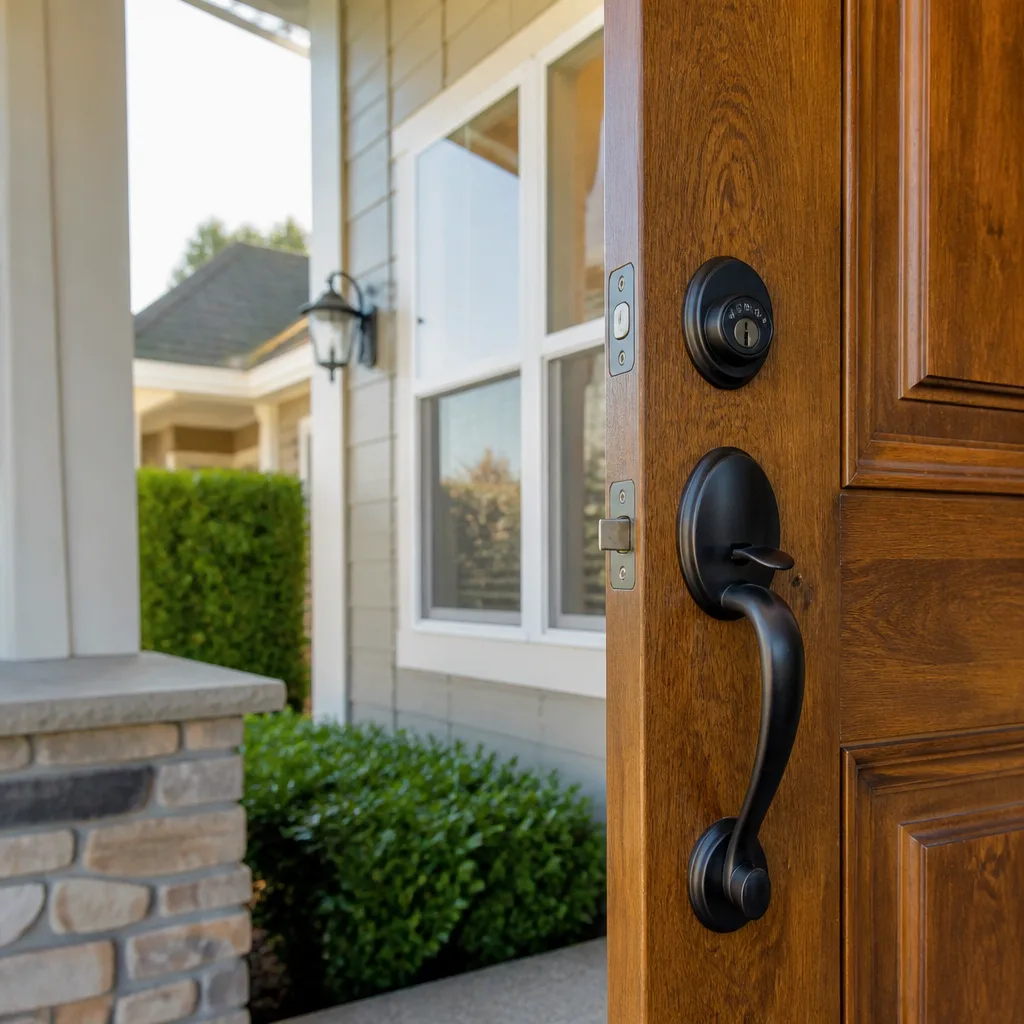
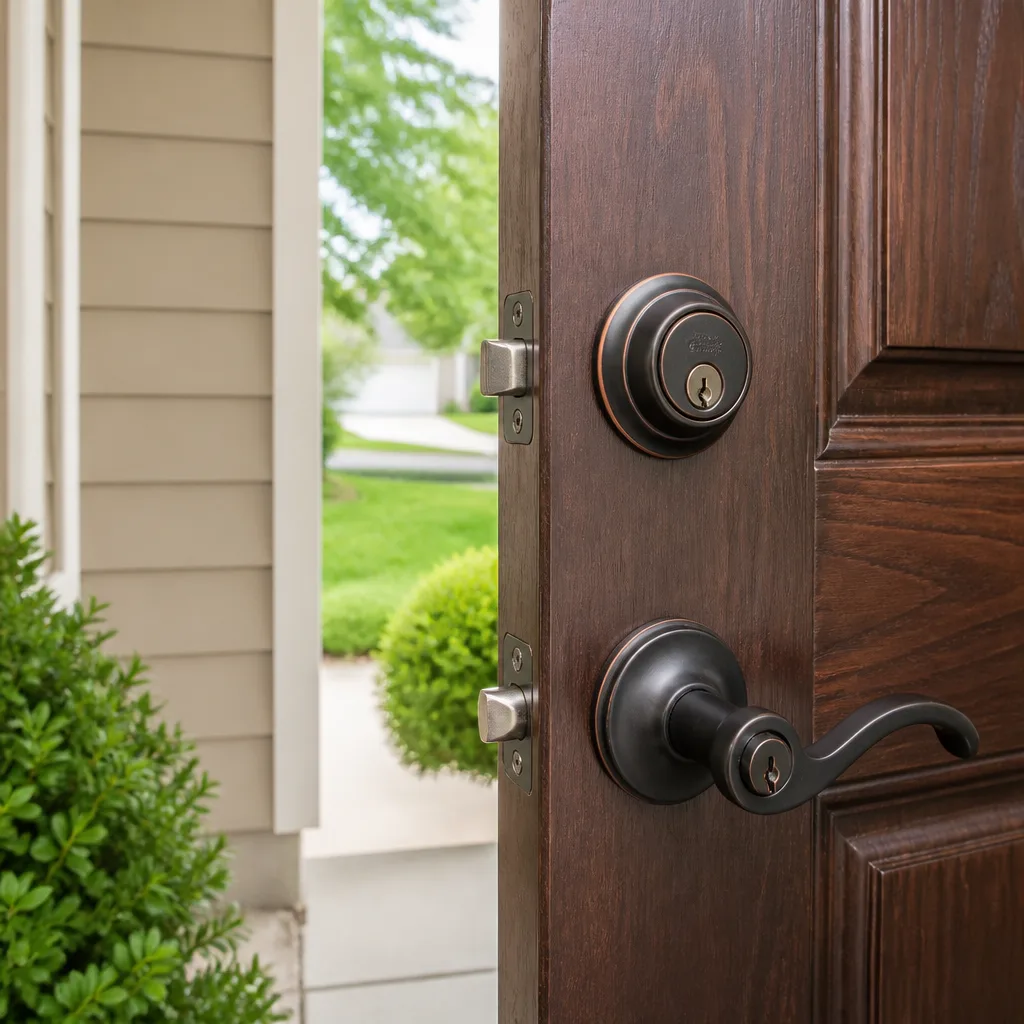
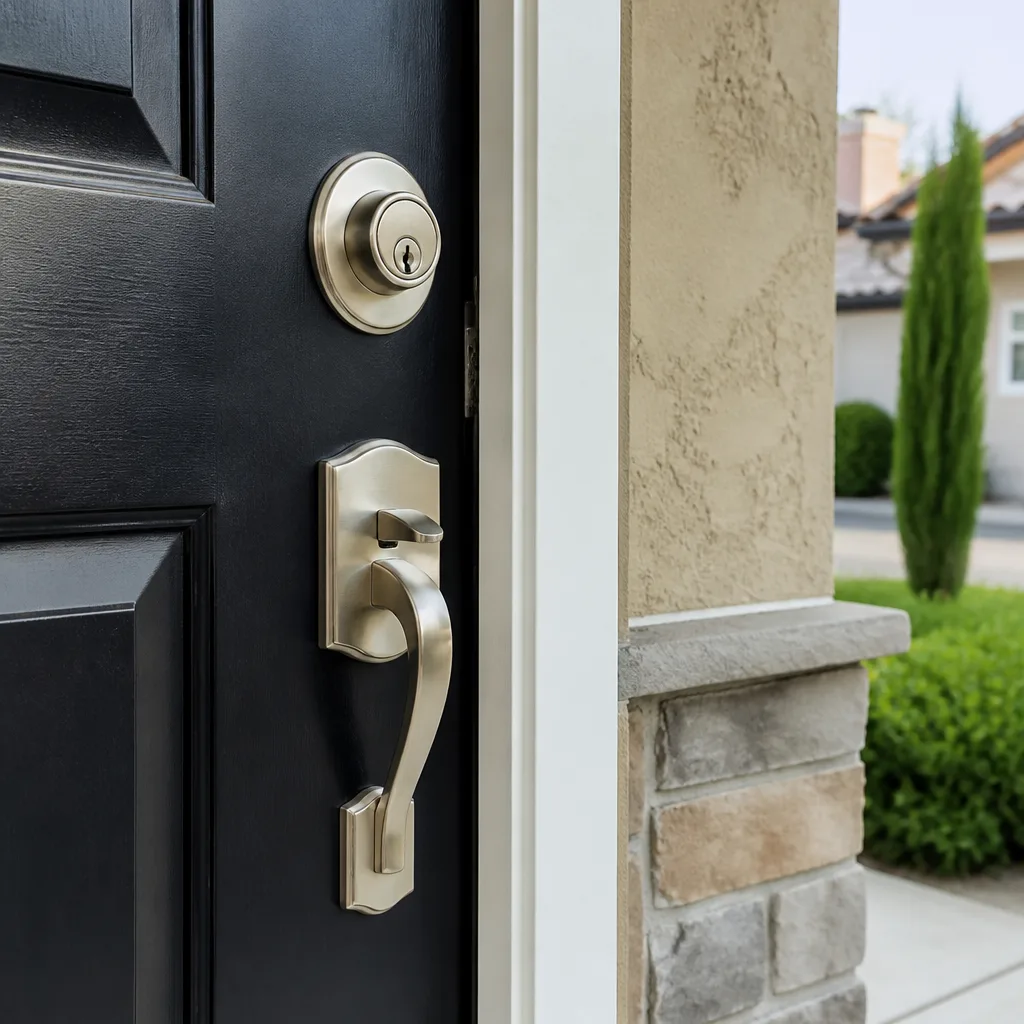
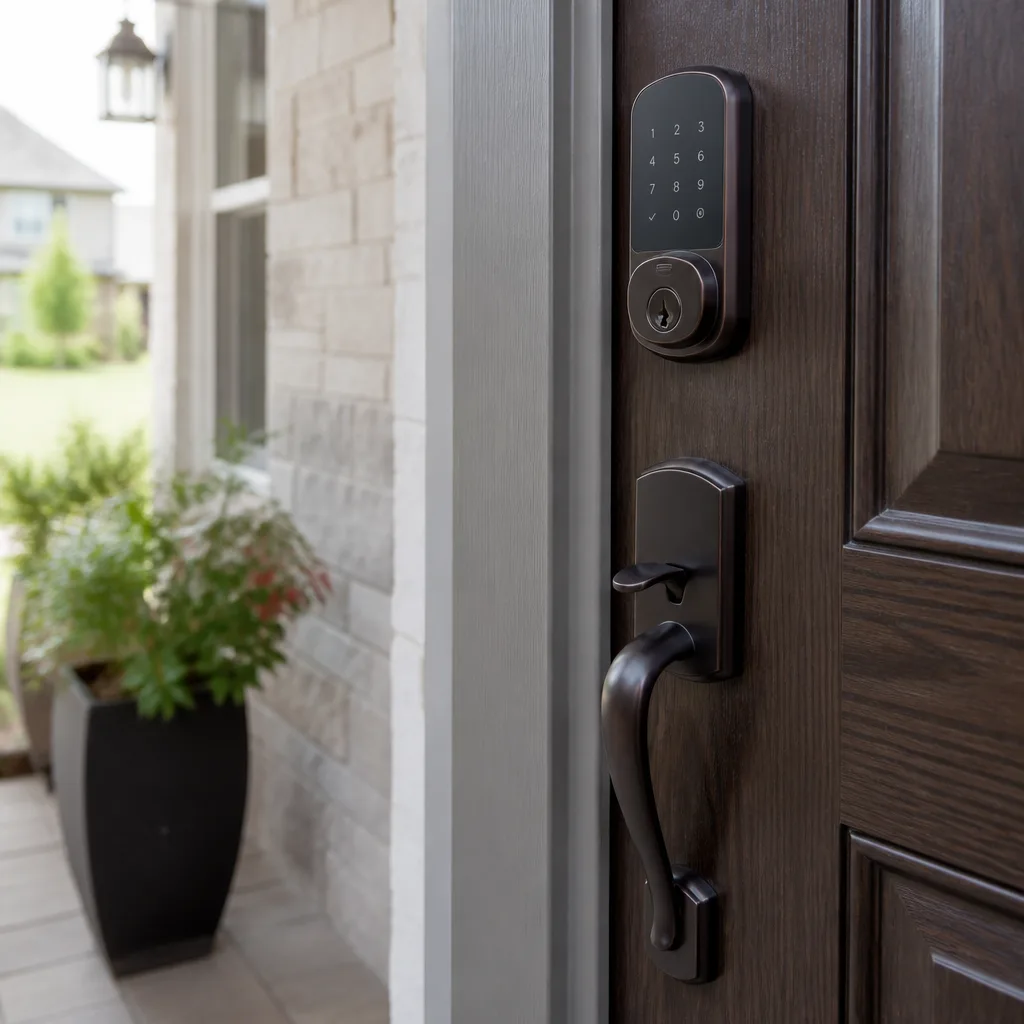
DIY vs Professional Commercial Locksmith: What’s Safe to Do Yourself
Replacing the batteries in a commercial keypad is DIY. Adjusting the latch backset on a fire-rated exit door yourself could void the door’s UL listing and expose you to a code violation fine in Los Angeles County. Most business owners never learn where that line sits until an insurance adjuster asks who touched the hardware last. This guide walks through the specific tasks you can safely handle in-house, the ones that legally require a licensed Commercial Locksmith services in California, and the paperwork that protects you when something goes wrong. You’ll also learn why the question isn’t really about skill. It’s about liability, and in Los Angeles, liability has a long memory.
Quick Answer
Safe DIY on commercial locks is limited to non-structural maintenance: battery replacement, exterior lubrication with graphite spray, and tightening loose screws on interior, non-fire-rated doors. Everything else, from rekeying a Schlage commercial cylinder to adjusting Sargent exit devices on fire-rated doors, should be handled by a licensed commercial locksmith because the work affects code compliance, insurance coverage, and legal liability. In Los Angeles commercial buildings, unauthorized work on fire-rated hardware can trigger building code fines and void warranty and UL listings.
Table of Contents
- The Liability Question: Who Touched It Last?
- What’s Genuinely Safe to Do Yourself
- Fire-Rated Hardware: Where DIY Legally Ends
- Master Key Systems: The Copy You Should Never Make
- Los Angeles Code and Commercial Door Hardware
- What a Professional Commercial Locksmith Documents
- DIY Cost vs Professional Cost: The Real Numbers
- Common Mistakes to Avoid
- When to Call a Professional
- Frequently Asked Questions
- The Bottom Line
The Liability Question: Who Touched It Last?
When a commercial lock fails and someone gets hurt or property disappears, the first question an insurance carrier asks is not “what went wrong.” It’s “who serviced this last?” If the answer is an employee with a screwdriver and a YouTube tutorial, the claim can move from covered to contested in a single conversation. We’ve seen this play out in Los Angeles commercial buildings more times than we can count, and the pattern is always the same: the business owner saved a hundred dollars on a repair call and then spent months arguing with an adjuster who wanted a service record that didn’t exist. For a deeper look at when doing it yourself makes sense versus calling a pro, see our guide on DIY vs Professional Locksmith: The Los Angeles Homeowner’s Decision Guide.
Think about what happens when a fire-rated door doesn’t latch properly because someone adjusted the strike plate without understanding positive latching requirements. The door fails to close during a fire. Smoke spreads. People are hurt. The building owner’s insurance carrier investigates, finds no work order, no invoice, no name attached to the adjustment, and the coverage dispute begins. Liability in commercial lock work isn’t just about the immediate repair. It’s about the paper trail that proves the work was done correctly by someone qualified to do it. That’s the asset a professional commercial locksmith provides before a single tool comes out of the bag.
Dunmore Locksmith has operated under the Threshold Group umbrella since 2007, and the one thing we’ve learned across thousands of Los Angeles commercial service calls is that business owners don’t get in trouble for what they don’t know. They get in trouble for what they half-know. The gap between “I tightened a loose screw” and “I adjusted something I shouldn’t have” is where liability lives. Our Dunmore Locksmith home services team gets called after DIY attempts more often than before them, and the second visit usually costs more than the first one would have.
What’s Genuinely Safe to Do Yourself
There is a real, legitimate category of commercial lock maintenance that any business owner or facilities manager can handle without risking code violations or insurance disputes. These tasks don’t involve disassembling lock bodies, changing internal pins, or touching fire-rated hardware. They’re about basic care and observation.
Safe DIY maintenance tasks:
- Battery replacement on electronic keypads and access control readers. If the lock body stays in place and you’re only swapping batteries in an external housing or cover, this is routine maintenance. Use the manufacturer’s specified battery type and note the replacement date in a simple log. Low-battery warnings should never be ignored; a dead keypad at 7 a.m. is a guaranteed call to us before the doors open.
- Exterior lubrication with dry graphite spray. Locks in Los Angeles accumulate fine dust, coastal salt, and grit from the Santa Anas. A short burst of graphite spray into the keyway twice a year keeps cylinders sliding smoothly. Do not use WD-40 or wet lubricants; they attract grime and gum up the pin chambers.
- Tightening loose screws on non-fire-rated, interior doors. Door handles and strike plates work loose over time, especially in high-traffic commercial spaces. A properly fitting screwdriver will take care of it. If a screw won’t stay tight because the hole is stripped, stop there; that’s a repair that requires replacing the screw with a longer fastener or repairing the thread, and doing it wrong can cause the plate to sit proud of the frame and defeat the lock.
- Visual inspection of door alignment and latch movement. You don’t need a locksmith to notice that a door has dropped on its hinges or that the latch catches the edge of the strike plate rather than sliding into it. Document what you observe with photos and notes. That record is useful when a professional does arrive, and it demonstrates ongoing maintenance diligence if an insurance question comes up.
- Replacing a knob or lever on a non-rated interior door, when it’s a like-for-like swap with no drilling. If the new hardware matches the existing footprint and you’re not changing the door prep, this is within reach for a competent facilities person. Keep the old hardware until the new one proves itself over a week of daily use.
None of these tasks involve changing keys, altering internal components, modifying exit devices, or working on fire-rated assemblies. That’s not an arbitrary line. It’s where California building code and insurance requirements start to care about who did the work.
Fire-Rated Hardware: Where DIY Legally Ends
Fire-rated commercial doors in California are not ordinary doors with better labels. They are tested assemblies: the door, the frame, the hinges, the closer, the latch, the exit device, the strike plate, even the screws holding them, were tested together by a recognized laboratory and certified to perform as a unit. When you alter any part of that assembly without proper re-certification, you invalidate the listing. The door can still look and work fine while it no longer legally qualifies as fire-rated protection.
ANSI/BHMA Grade 1 exit devices, the horizontal push bars you see on commercial buildings throughout Los Angeles, are precision hardware. Adjusting the latch backset, changing the strike position, or replacing components with non-certified equivalents changes how the door latches under stress. A fire-rated door that doesn’t positively latch into the frame will not contain smoke and flame. That’s not a theoretical concern. The Los Angeles Fire Department inspects commercial occupancies and can issue violations for altered or non-functional fire-rated hardware. The fines are not small, and the fix often requires replacing the entire affected assembly, not just the part that was altered.
California requires licensed contractors for work on fire-rated assemblies in commercial buildings. “Licensed” here means a locksmith company operating under the appropriate state contractor classification, not a handyman with a van. When you hire a commercial locksmith for fire-rated hardware, you’re paying for the license, the knowledge of UL 10C and NFPA 80 requirements, and the paperwork that follows the work. If you’re in a Los Angeles commercial space and the exit device on a fire-rated door isn’t working smoothly, don’t adjust it yourself. That’s a call to a professional who will document that the assembly was restored to its tested configuration.
Master Key Systems: The Copy You Should Never Make
Master key systems are legal contracts embodied in brass and steel. The property owner or manager holds the top-level key, and every tenant key is a sub-key that works in a specific pattern determined by the key control agreement. That agreement defines who can order copies, who can access which doors, and what happens when a key goes missing. If you’re a tenant in a Los Angeles commercial building and you walk into a hardware store to duplicate a Mul-T-Lock or Medeco key, you may not even be able to; these high-security keyways are patent-protected, and blanks are only sold to authorized channels. But if you’re working with a less restricted system and you manage to get an unauthorized copy made, you’ve likely just voided the key control agreement.
That’s not an abstract legal consequence. If the property manager discovers an unauthorized duplicate floating around after a suite is burglarized with no sign of forced entry, the insurance conversation gets very pointed very quickly. The key control agreement exists to define accountability, and breaking it undermines the entire security model. The proper path is simple: put in a work order for additional keys or a rekey, with the property manager’s sign-off. If the building is being rekeyed, the work needs to go through a licensed commercial locksmith who can document how many keys were made, who received them, and which cylinders were changed. We handle rekeying for commercial properties across the city, and the paper trail we produce is part of the service, not an afterthought. For more on how we approach this, see our Change Door Locks in Los Angeles page.
Los Angeles Code and Commercial Door Hardware
Specific regulations govern commercial door hardware in Los Angeles, and business owners should know which ones apply before they reach for a screwdriver. The Los Angeles Building Code (LABC) incorporates the California Building Code with local amendments, and the amendments are not decorative. They exist because this city has a high volume of legacy commercial buildings, many of them in dense districts where fire spread between occupancies is a real structural risk.
Code provisions that matter for commercial lock work:
- Fire-rated door assemblies must be tested and certified as complete units. LABC Section 715 and the referenced NFPA 80 standard require that fire doors be inspected, maintained, and adjusted in accordance with the manufacturer’s certified instructions. An adjustment that deviates from those instructions is a code violation, not just a warranty issue.
- Positive latching is mandatory on fire doors. The latch bolt must fully project into the strike plate when the door closes. A fire door that can be pushed open without operating the latch is non-compliant, period. This is the single most common issue we find after DIY strike plate adjustments, because a plate moved a quarter inch to “make the door close easier” often defeats positive latching entirely.
- Tenant improvements that alter door hardware on fire-rated walls require a permit. If you’re changing hardware on a door that sits in a rated corridor wall or stairwell enclosure, the city treats it as a modification to a rated assembly. A permit is required, and the work must be done by a licensed contractor. Unpermitted work discovered during an inspection typically triggers a correction notice and, in practice, a more expensive fix than the permitted work would have cost originally.
- Access-controlled egress doors must comply with Section 1010 of the California Building Code. The requirements are specific: a sensor must automatically unlock the door on approach, a manual release button must be located at the door with a specific sign, and the door must fail secure in a manner that still allows free egress. Wire this wrong and you’ve created a life-safety hazard, not a convenience.
- High-rise commercial buildings have additional inspection requirements. In Los Angeles, high-rise office and residential towers undergo periodic fire door inspections, and non-compliant doors must be repaired by qualified personnel. The inspection report becomes part of the building’s fire safety record. A hand-adjusted exit device that fails that inspection gets red-flagged, and the building owner receives the correction order.
What this means practically: on doors that are not in rated walls, not part of egress paths, and not access-controlled, your DIY options are broader. On doors that are any of those things, the law has already decided for you. Call a professional.
What a Professional Commercial Locksmith Documents
The most valuable thing we hand a business owner after a commercial locksmith service call isn’t a key. It’s a piece of paper. Or more accurately, a service record that can later be produced for an insurance adjuster, a fire inspector, or a property manager. That documentation is not a bureaucratic formality; it’s the functional difference between “we had the lock serviced” and “we can prove the lock was serviced correctly by a licensed provider.”
A proper commercial service record from a Los Angeles locksmith includes:
- The legal business name, license number, and service address. If the company has a contractor license, it appears on the invoice. That number is how the state verifies the business is properly classified for the work performed.
- The technician’s name and identification. Under the Threshold Standard, every Dunmore Locksmith technician is background-checked, identity-verified, and arrives with a photo ID badge. The customer is told who is coming before the visit, and the technician’s name appears on the service record.
- A full description of the work performed, including hardware brands and models. “Adjusted Sargent 80 Series exit device on fire-rated door, restored positive latching, verified latch projection per manufacturer spec” is a record. “Fixed door” is not.
- The date, time in, and time out. Documentary continuity matters if the question later becomes “when was this door last touched before the incident?”
- Written pricing confirmed before work begins. No estimate that balloons, no after-the-fact totals. The price quoted before dispatch is the price on the invoice.
- The 365-Day Done Right Promise. Every repair we complete carries a written one-year guarantee. If the repair fails, we return at no charge. That promise is part of the service record.
- Service call (trip charge): $45 – $95, often waived with a completed repair
- Basic labor (first hour): $85 – $135
- Rekey per standard commercial cylinder: $25 – $45
- Rekey per high-security cylinder (Medeco, Mul-T-Lock, Abloy): $45 – $85
- Exit device (panic bar) replacement on fire-rated door: $600 – $1,800 installed, depending on brand and certification requirements
- Electric strike replacement: $250 – $550 installed
- Keypad or access control lock replacement: $350 – $900 installed, plus programming
- Using WD-40 or household oil in a commercial lock cylinder. These wet lubricants work fine for hinges and garage tracks. In a commercial keyway, they attract dust and grime from Los Angeles streets and the pollution of high-traffic corridors, eventually turning into a sticky sludge that causes key insertion failures. Use dry graphite spray or a Teflon-based dry lubricant only.
- Adjusting a strike plate on a fire-rated door because the latch doesn’t line up. The alignment problem is usually the door hinge or the closer, not the strike. Moving the strike plate to “fix” the alignment destroys the positive latching geometry and creates a code violation. This is the most common fire-door problem we repair after a DIY attempt.
- Making an unauthorized key copy for a commercial master key system. If you’re a tenant in an LA commercial building, your key agreement almost certainly restricts duplication. Unauthorized copies void the key control contract and become a liability if anything goes missing. Always go through the property manager for key requests.
- Drilling new holes in a door to install a different lock without checking fire rating. If that door is in a rated wall, you’ve just compromised a tested assembly. If the door is a hollow metal commercial door, drilling without the correct tools leaves jagged edges that snag, rust, and eventually fail. This is a replacement job for a pro, not a Saturday afternoon project.
- Ignoring a sluggish exit device because “it still works.” Exit hardware that needs extra pressure or doesn’t retract cleanly is telling you something. In an emergency, that extra second or two matters. A commercial locksmith can service the device and restore it to proper function; ignoring it invites a Los Angeles Fire Department citation.
- Forgetting to log battery changes on access control systems. A battery swap is safe DIY, but not writing down when you changed it means you’ll be surprised by the next low-battery warning. Simple logs prevent lockouts and show diligence if an insurance question ever arises.
- Hiring an unlicensed person because the price was lower. In California, work on fire-rated commercial hardware requires a properly licensed contractor. The guy with the lowest price and no license is not cheaper. He’s uninsured, undocumented, and unavailable when the fire inspector shows up.
If you do the work yourself, none of this exists. You have a receipt for a screwdriver and a story about how careful you were. For a business owner facing a six-figure insurance claim, that’s not just inadequate. It’s an invitation for the carrier to deny coverage based on unverified work on rated hardware.
DIY Cost vs Professional Cost: The Real Numbers
The honest math on DIY commercial lock work rarely favors the do-it-yourselfer once you account for what can go wrong. A tube of graphite spray costs $8. A screwdriver set costs $30. A commercial locksmith service call in Los Angeles for a simple issue typically runs $95 to $180 for the visit and basic labor, with parts added on top. A full rekey of a commercial cylinder for a Schlage or Sargent system may run $25 to $45 per cylinder plus the service call. That’s the surface comparison. Here’s what it misses.
Representative Los Angeles commercial locksmith pricing:
If a DIY adjustment on a fire-rated door goes wrong, the repair often isn’t just “put it back.” It’s an inspection by a certified professional if the assembly was compromised, potential re-certification, and in the worst case, replacement of the entire assembly at $1,500 to $3,000 or more. The $30 you saved turns into a $2,000 problem with a paper trail that makes an insurance adjuster’s eyes narrow. For $95 to $180 on the front end, you get a service record, a licensed technician, correct parts, and the 365-Day Done Right Promise. The professional option is not the expensive option. It’s the option with the predictable invoice.
We’ll give you an exact, written quote before anyone is dispatched, and that quote is the final price. There is no call-out surcharge added when the truck pulls up, and no revised total after the work is done. For more on how we price door lock work specifically, see our Door Lock Repair in Los Angeles page.
Common Mistakes to Avoid
When to Call a Professional
Call a commercial locksmith when the door is fire-rated and the hardware is misbehaving, when the lock is part of a master key system and you need changes made, when an exit device doesn’t respond cleanly, when access control wiring is involved, and when you’re a tenant who doesn’t have authority to modify the hardware but needs it fixed. Call before you’re locked out, not after. The price of a service call is nothing compared to the cost of a fire-door citation, a denied insurance claim, or a business day lost to an unsecured entry. Dunmore Locksmith offers free estimates in Los Angeles – call (910) 714-4287 and a live person will answer, any hour, every day of the year.
Frequently Asked Questions
Battery replacement on keypads and access readers, exterior lubrication with dry graphite spray, tightening loose screws on non-fire-rated interior doors, and basic visual inspection of door alignment are safe DIY tasks. Anything involving disassembly of lock bodies, adjustment of fire-rated exit hardware, or changes to master key systems should be handled by a licensed professional. These tasks don’t require opening the lock mechanism, so they don’t trigger liability, code, or insurance complications.
A commercial locksmith service call in Los Angeles typically runs $45 to $95 for the trip charge, with basic labor at $85 to $135 for the first hour. A standard rekey runs $25 to $45 per cylinder, while high-security cylinders for Medeco, Mul-T-Lock, or Abloy systems run $45 to $85 per cylinder. Exit device replacement on fire-rated doors runs $600 to $1,800 installed depending on brand and certification. Call (910) 714-4287 for a written, binding quote before any work starts.
Yes. Dunmore Locksmith delivers a written price before any work begins, and the number on that quote is the number on your invoice. There are no surprise totals at the end, no call-out surcharges added on arrival, and no revised estimates after the fact. The 365-Day Done Right Promise covers every repair for a full year; if the repair fails, we return at no charge.
Yes. Fire-rated door assemblies are certified as complete units, and any alteration from the manufacturer’s tested configuration invalidates the listing under NFPA 80 and the Los Angeles Building Code. Adjusting a latch backset, strike plate, or exit device on a fire-rated door is the most common DIY mistake we see, and the correction often requires professional restoration or full assembly replacement. This is not a warranty technicality; it’s a life-safety compliance issue.
Request the company’s contractor license number and verify it with the California Contractors State License Board. Ask if the technician is background-checked and whether you’ll receive the technician’s name and photo before the visit. Under the Threshold Standard, every Dunmore Locksmith technician is identity-verified, background-checked, photo-badged, and sent to the customer by name and photo before the visit. If anyone arrives who you weren’t told to expect, that visit is covered at no charge.
A professional commercial locksmith should be qualified to install and service the major commercial hardware lines: Schlage, Sargent, Yale, Kwikset, Baldwin, Medeco, Mul-T-Lock, and Abloy. Dunmore Locksmith is factory-authorized on these lines, from standard pin-tumbler rekeying to high-security commercial cylinders. Using a provider who stocks and understands these systems means the right parts are installed the first time, and the work is documented to manufacturer spec.
The Bottom Line
The line between safe DIY and dangerous DIY on commercial locks is not about how skilled you are with a screwdriver. It’s about what the law, your insurance policy, and your lease agreement say about who is permitted to touch the hardware. Replace batteries, lubricate cylinders, tighten loose screws on interior doors, and keep a maintenance log. Leave fire-rated exit devices, master key changes, access control wiring, and any repair on a certified door assembly to a licensed commercial locksmith who will hand you a service record with a name, a license number, and a written guarantee. In Los Angeles, that record is the difference between a covered claim and an expensive conversation. For more about how we handle commercial and residential work across the city, see our Residential Locksmith in Los Angeles page or call us directly.
Written by Perry Osgood, Owner at Dunmore Locksmith, serving Los Angeles since 2007. Explore more guides & resources from our team.